Water and urban growth: planning today so families have services tomorrow
2 min readInvestors, Customers

At NEXO SUMMIT 2026, held on September 9 and 10, the study Water, Urban Growth and Investment in Peru: Evidence from Eight Cities was presented. It was commissioned from GRADE by the Confederation of Real Estate Developers of Peru (CODIP). The analysis, based on data from 2017 to 2026, puts an urgent challenge for urban development at the center: access to drinking water.
At this event, Guillermo Velaochaga, general manager of Los Portales, moderated the panel “Who Pays for Water? Private and Public Investment for Urban Development,” together with José Antonio Salardi, institutional executive director of CODIP, and Hania Pérez de Cuéllar, former Minister of Housing, Construction and Sanitation.
Two ways to face city growth
The study describes a reactive model, associated with informal expansion: land is occupied first and homes are built without basic services; then the State tries to close the gaps. According to its findings, 81% of new homes do not have drinking water.
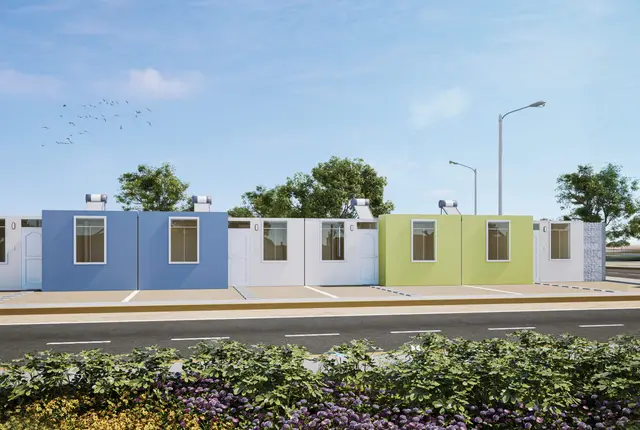
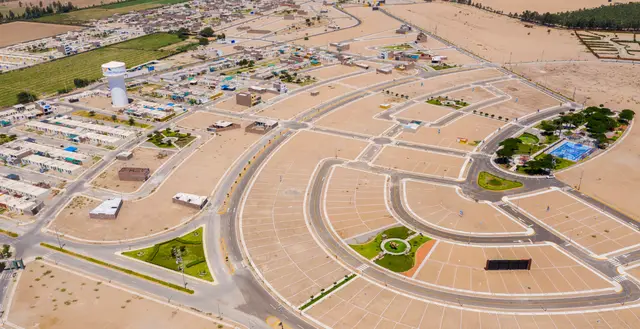
Against this backdrop, formal developments make it possible to apply a preventive model. Land planning and the early installation of water and sanitation infrastructure allow families to have access to these services from the start of their life in the project.
The study's data show that, although formal expansion accounts for 12.9% of new buildings in the growth areas analyzed, it concentrates 68.2% of the estimated access to drinking water. These results highlight the contribution that urban planning can make when it incorporates basic services from the beginning.
Investment and efficiency to bring services to more families
The analysis also compares the execution of the local works needed to bring water to homes, such as networks, reservoirs and household connections. According to the study, one connection costs around S/ 16,000 when carried out by the State and S/ 4,500 when carried out by the private sector.
As for timelines, the private works considered in the analysis were completed in an average of 4.5 months, compared with the 36 months that equivalent public projects usually take. These differences show how private investment can help speed up the provision of infrastructure and expand the capacity to respond to urban growth.
An effort that requires collaboration
Private investment does not replace the responsibility of the State. Sustainable access to services requires coordination between both sectors and rules that facilitate different forms of collaboration, such as public-private partnerships and works-for-taxes or services-for-taxes mechanisms.
The panel also highlighted the importance of opening space for alternative models of private participation that make it possible to take advantage of efficiencies and respond more quickly to cities' needs.
Planning to improve quality of life
At Los Portales we believe that building a city means anticipating people's needs. That is why we develop formal projects with planning and water and sanitation infrastructure, as part of our commitment to orderly growth and the well-being of families.